
Volcanic Bombs
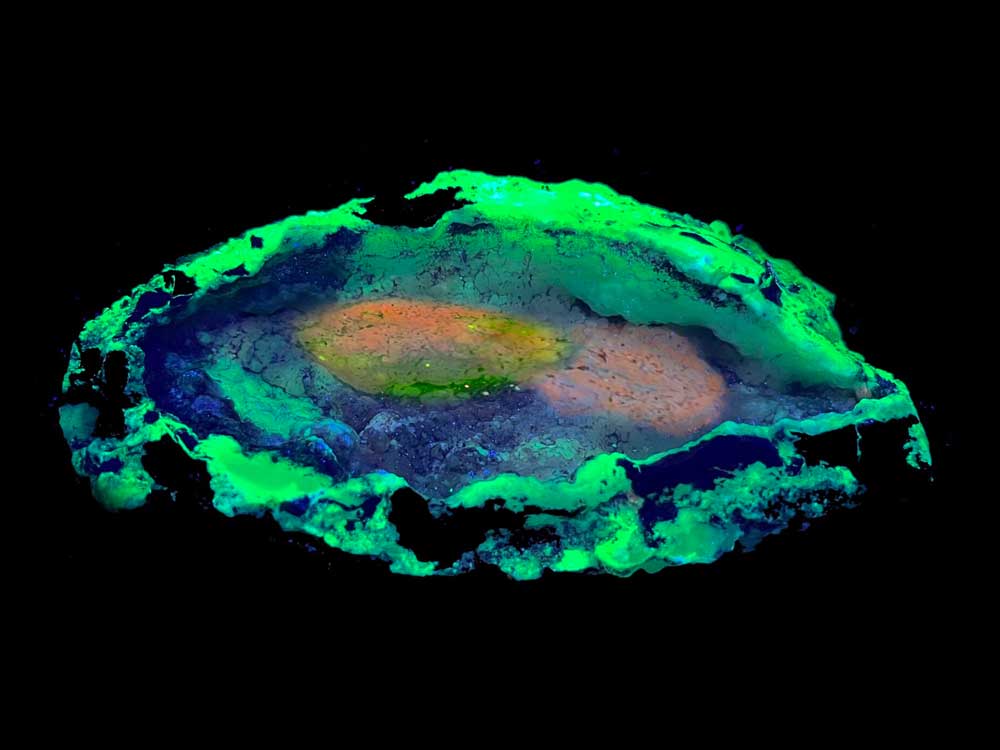
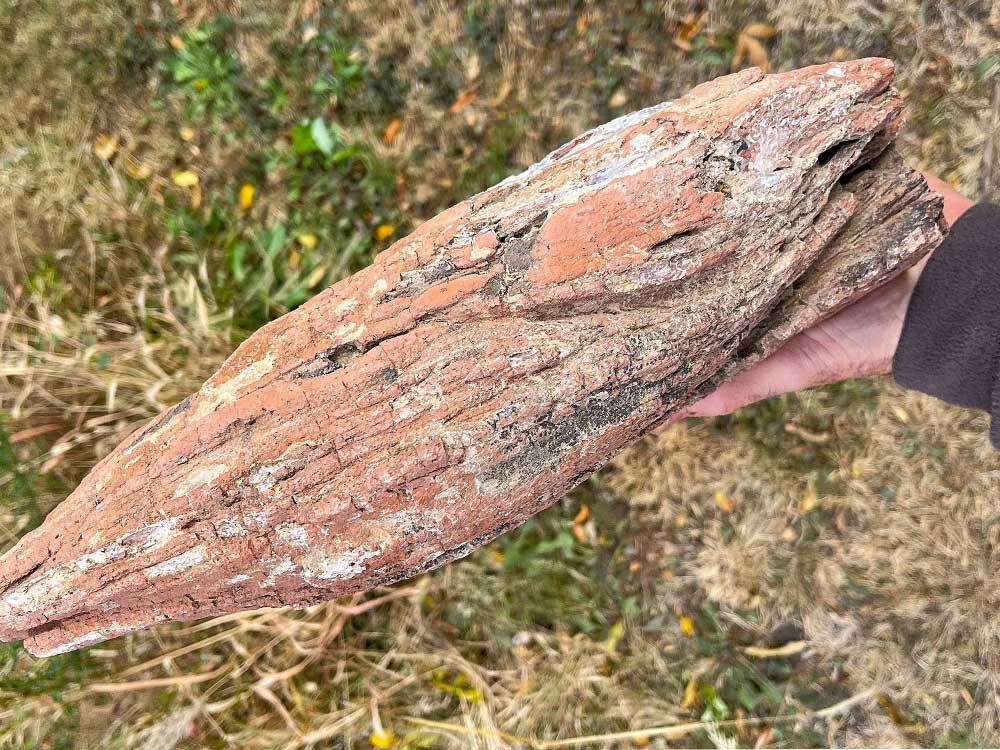
These unusual rocks form when an explosive volcano ejects viscous globs of lava during an eruption. Volcanic bombs can be extremely large and may travel many miles from the vent where they originated. As the magma flies through the air, it acquires an aerodynamic shape which, if it hardens well enough before falling back to the ground, may retain its characteristic shape and pattern. These bombs are some of the best we have ever found – in size, shape, and surface patterning. Add to that the fact they also fluoresce, and you have a truly unique geologic specimen.
Their story began way below the surface of the planet, as liquid magma in the mantle, some of which was violently blasted out of a volcano. As these blobs flew through the air, they were aerodynamically sculpted and shaped, acquiring characteristic flow lines and “keels”. Finally, the bomb returned to Earth and impacted on the surface, where it was buried in ashfall and other sediments. Later the whole region was uplifted in a mountain-building episode and those sediments were eroded, releasing the volcanic bombs we find there today.
Volcanic bombs can be a significant hazard – causing severe injuries to people in an eruption zone. In 2018, 23 people were injured near the Kilauea volcano as a result of a basketball-sized volcanic bomb hitting their tour boat. No one was killed, but it sure gave them something to talk about later!
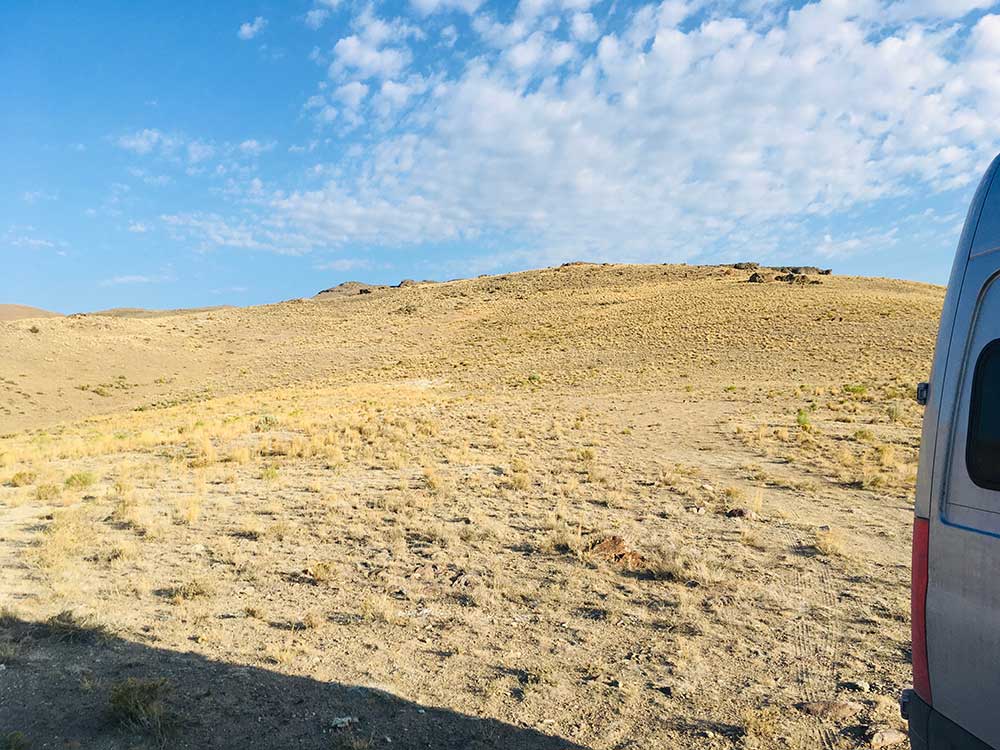
These particular bombs were ejected from volcanoes which abounded in northern Nevada about 8 million years ago. The bombs erode out of the Miocene sediments in which they landed and are found on the surface today. Most of them were hollow when they originally formed and, over ensuing millions of years, became lined with milky white chalcedony which fluoresces various shades of green and sometimes light pink.
These specimens not only showcase the dynamic processes of volcanic eruptions but also serve as valuable records of the region’s geological history.