Microbially Induced Sedimentary Structure (MISS01)
$6,800.00
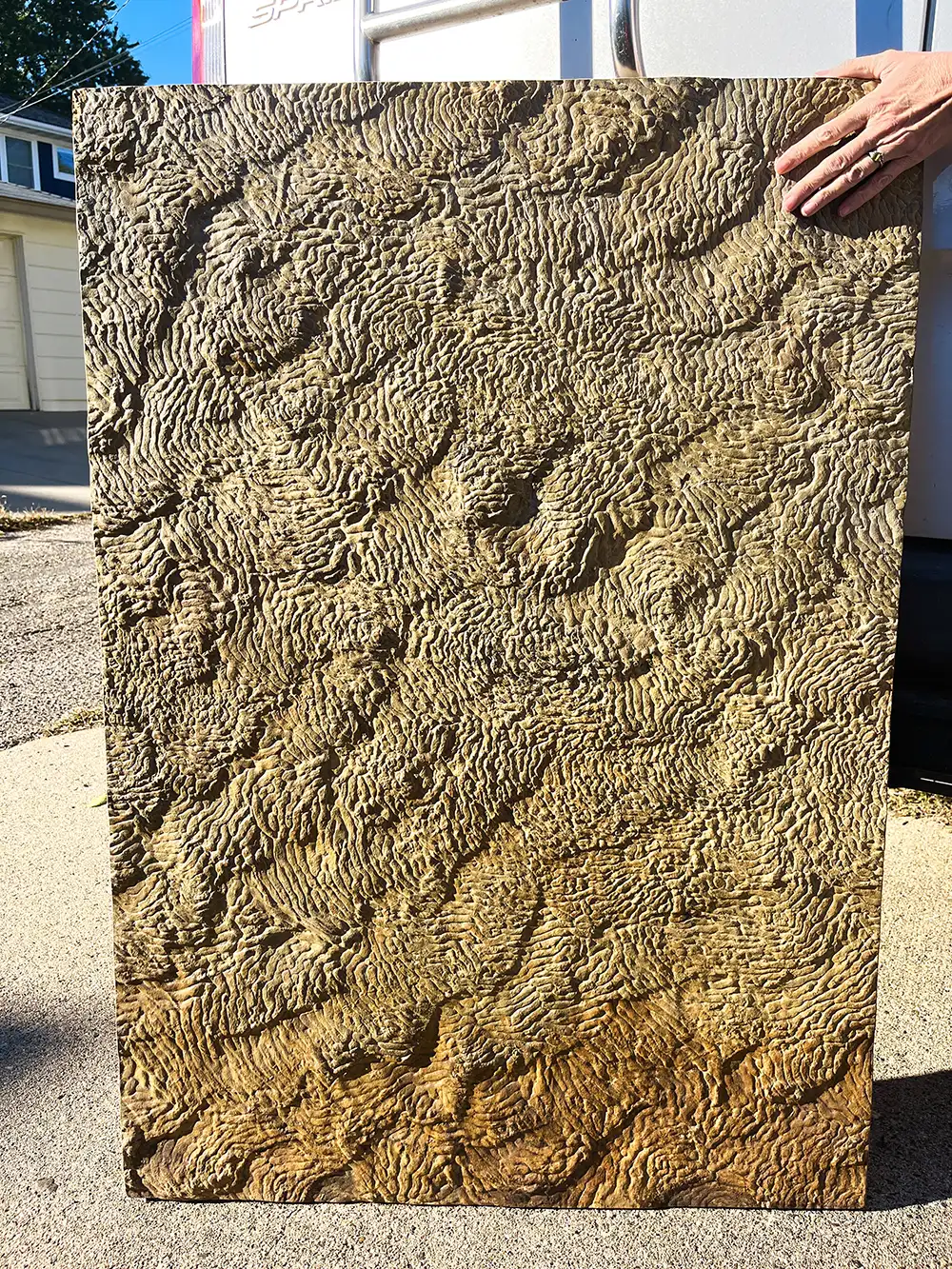
Notes specific to this specimen: Incredible specimen! This strange and unique material was discovered years ago when our associate Glen Rockers was visiting a small quarry in Oklahoma. He excavated half a dozen slabs before the quarry worked through the area and the layer was destroyed. Most of the specimens were donated to museums, including one we gave to the Smithsonian in 2024 and another to the Florida Museum of Natural History in 2025.
HOW THEY FORMED
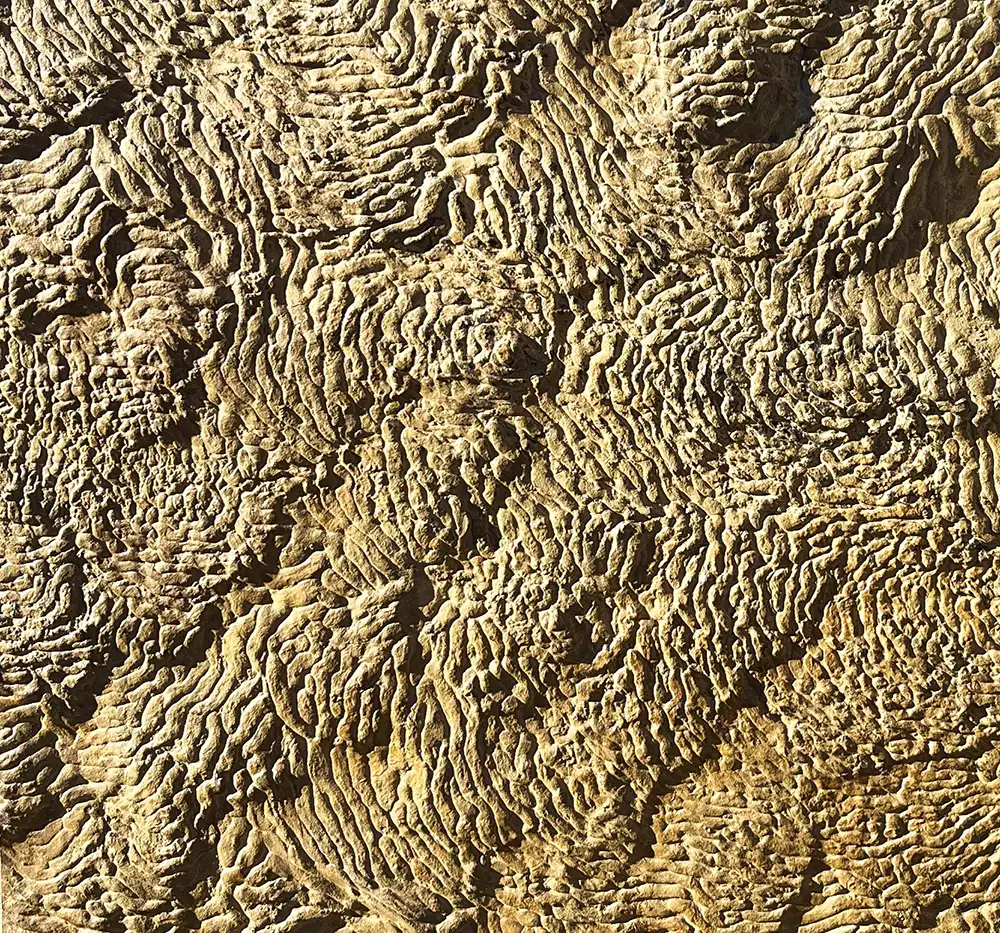
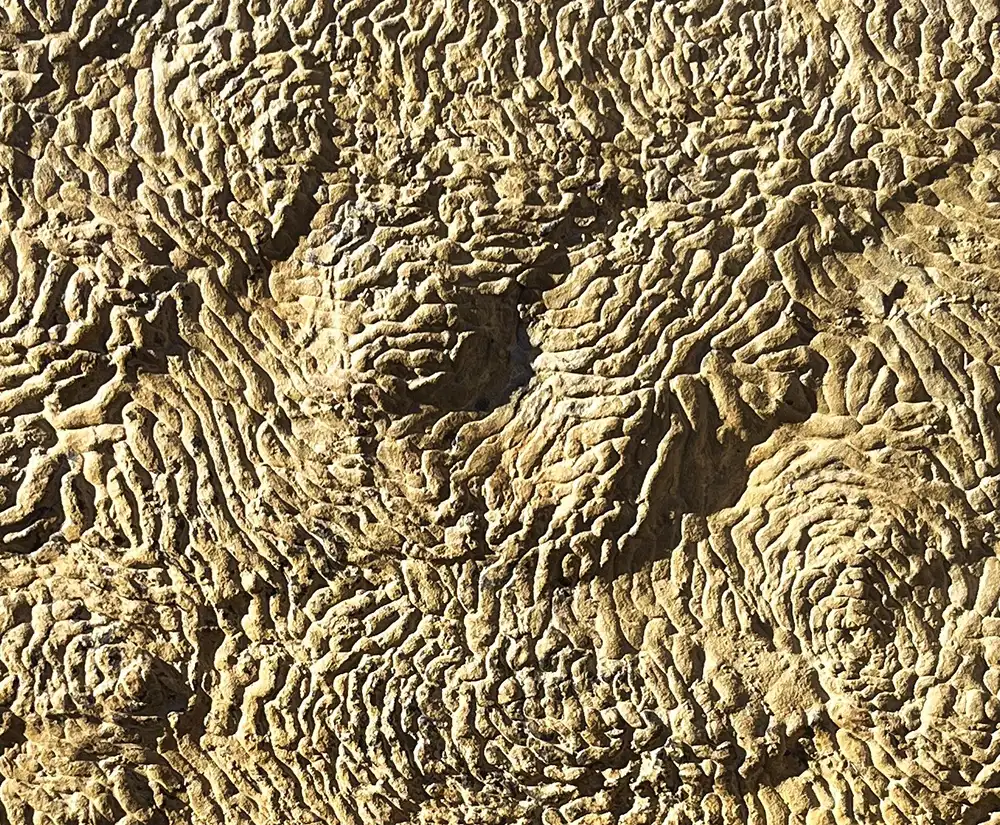
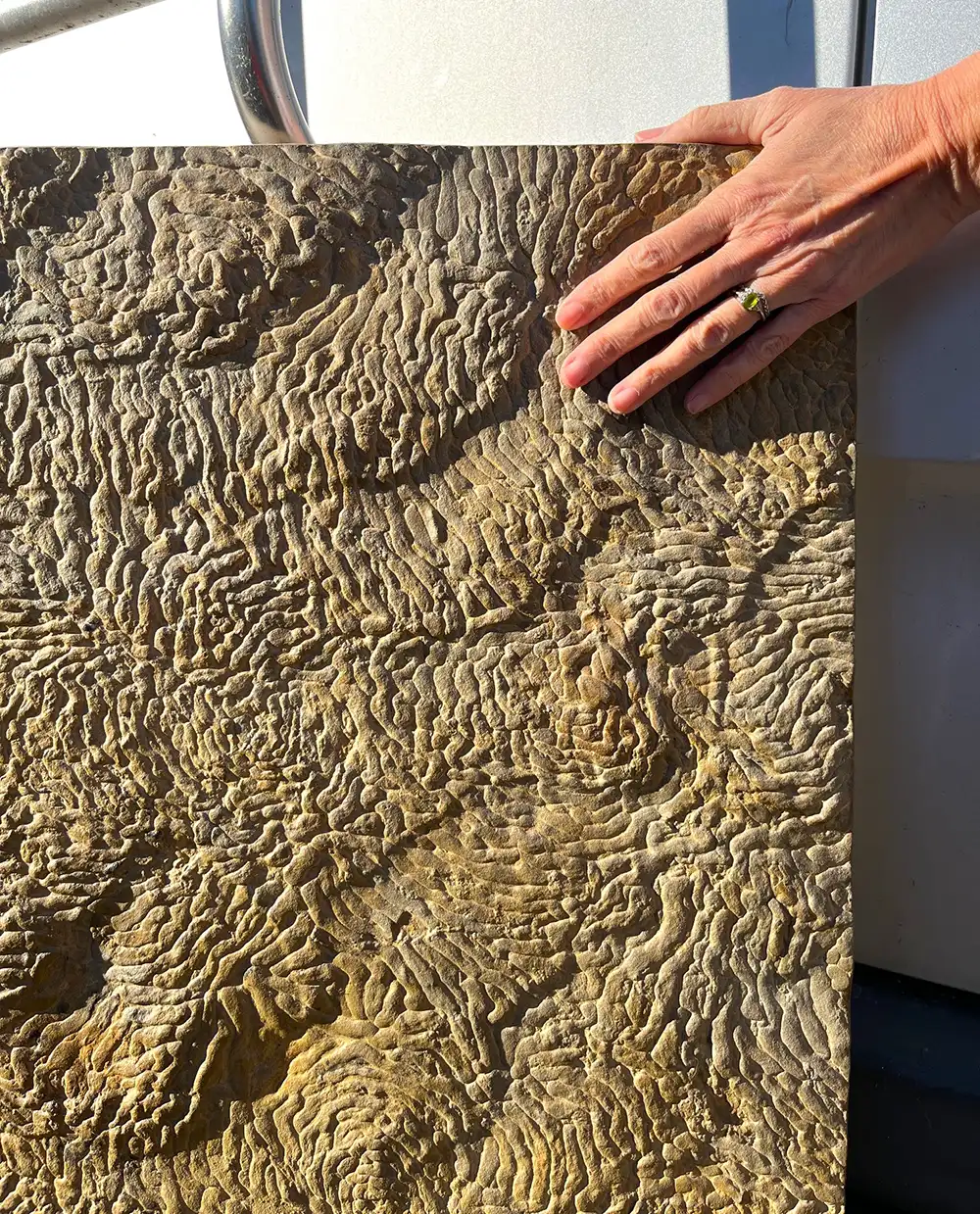
This MISS structure formed when microbial mats, composed primarily of bacteria and algae, colonized the sandy sediments of a coastal environment approximately 305 million years ago. The microbes secreted sticky extracellular substances that bound sand grains together, stabilizing the sediment surface against currents and waves. As sediment accumulated, microbial growth, mat shrinkage, and interactions with moving water produced the complex ridges, wrinkles, and convoluted wavy patterns preserved in the rock. Burial beneath subsequent layers of sediment protected the structures from erosion. Over time, compaction and cementation transformed the sand into Hartshorne Sandstone, preserving this fossilized record of microbial activity in an ancient environment.
SIZE: 28″ x 40″ x 1.5″
Notes specific to this specimen: Incredible specimen! This strange and unique material was discovered years ago when our associate Glen Rockers was visiting a small quarry in Oklahoma. He excavated half a dozen slabs before the quarry worked through the area and the layer was destroyed. Most of the specimens were donated to museums, including one we gave to the Smithsonian in 2024 and another to the Florida Museum of Natural History in 2025.
HOW THEY FORMED
This MISS structure formed when microbial mats, composed primarily of bacteria and algae, colonized the sandy sediments of a coastal environment approximately 305 million years ago. The microbes secreted sticky extracellular substances that bound sand grains together, stabilizing the sediment surface against currents and waves. As sediment accumulated, microbial growth, mat shrinkage, and interactions with moving water produced the complex ridges, wrinkles, and convoluted wavy patterns preserved in the rock. Burial beneath subsequent layers of sediment protected the structures from erosion. Over time, compaction and cementation transformed the sand into Hartshorne Sandstone, preserving this fossilized record of microbial activity in an ancient environment.
SIZE: 28″x 40″x 1.5″
Name / Species: Microbially Induced Sedimentary Structure (MISS)
Age: Pennsylvanian Period - 305 Million Years
Unit: Hartshorne Sandstone
Site: Haskell County, Oklahoma
Collected: 2006
Collected by:
Documentation: This authentic fossil specimen comes with a Certificate of Authenticity and Origin.
Additional information
| Name / Species | Microbially Induced Sedimentary Structure (MISS) |
|---|---|
| Age | Pennsylvanian Period – 305 Million Years |
| Unit | Hartshorne Sandstone |
| Site | Haskell County, Oklahoma |
| Collected | 2006 |