Trilobite Tracks (TRX01)
$9,600.00
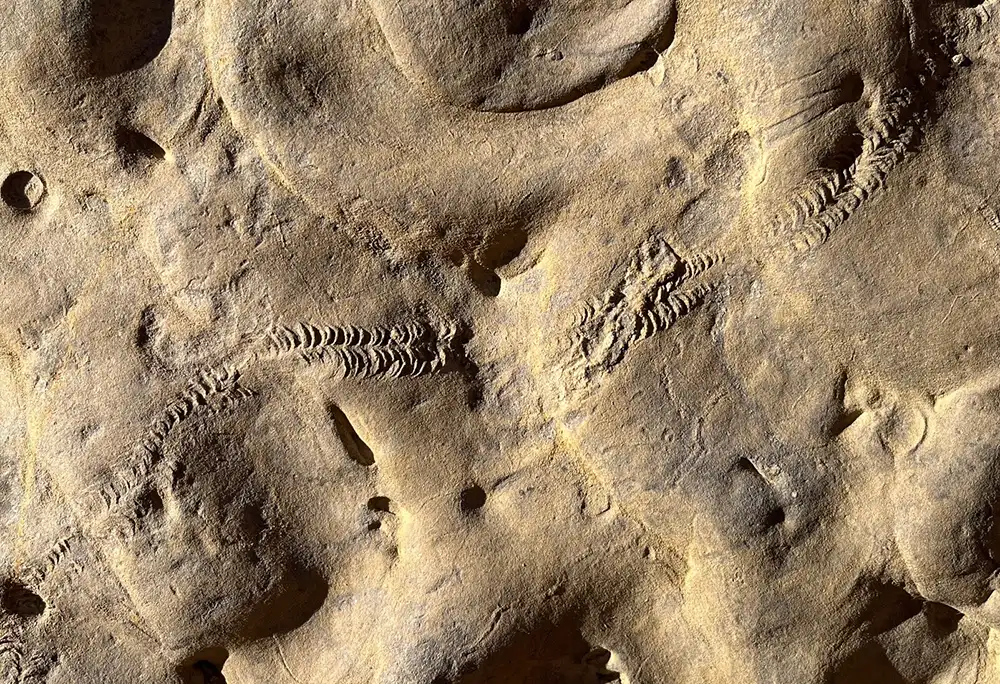
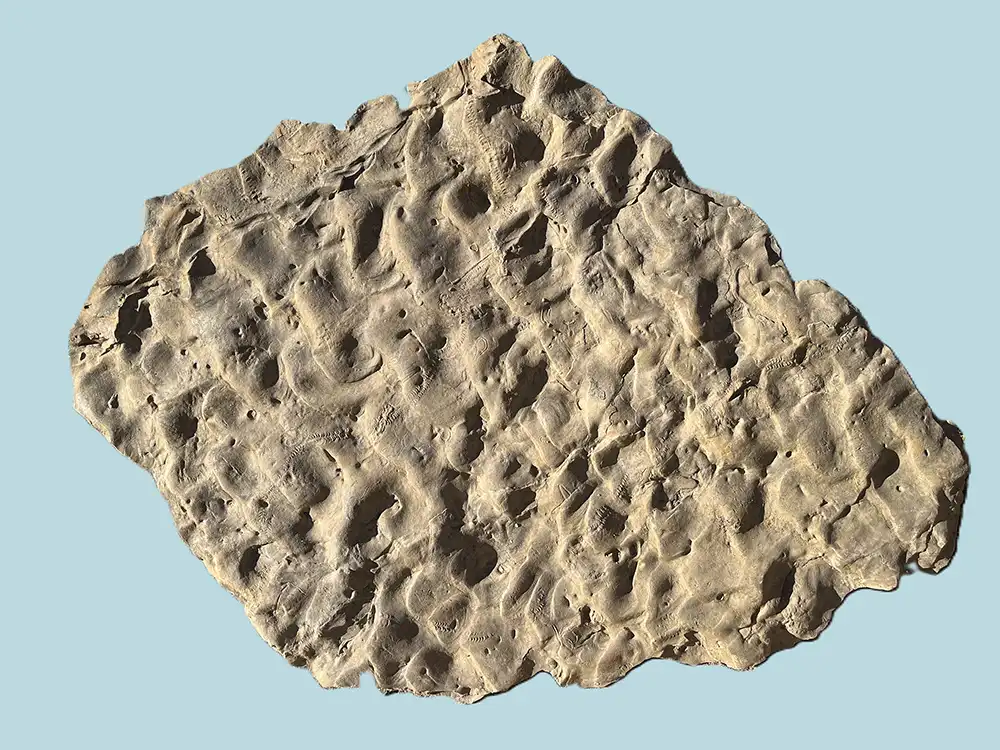
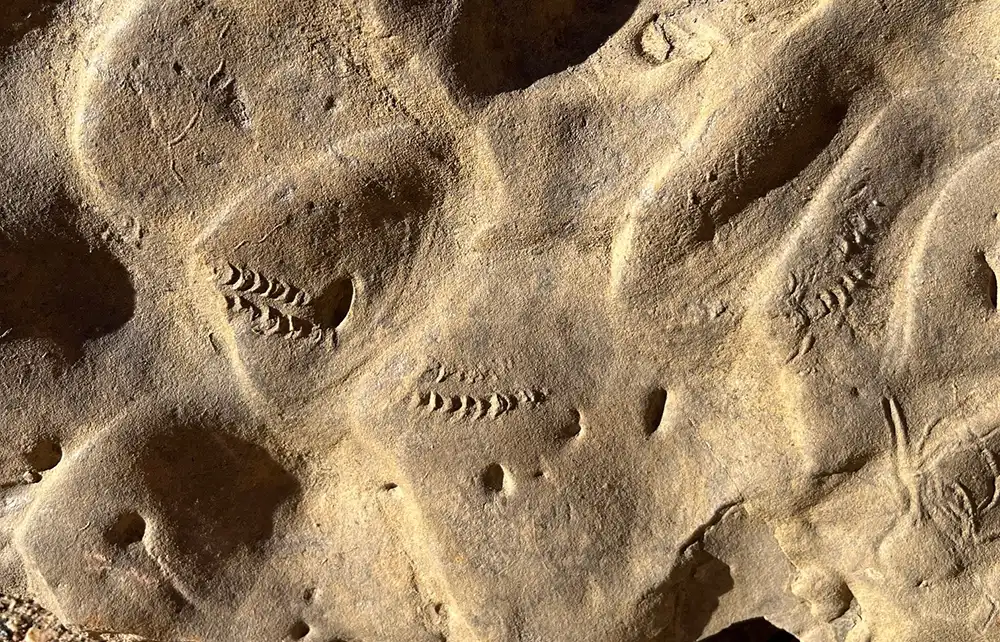
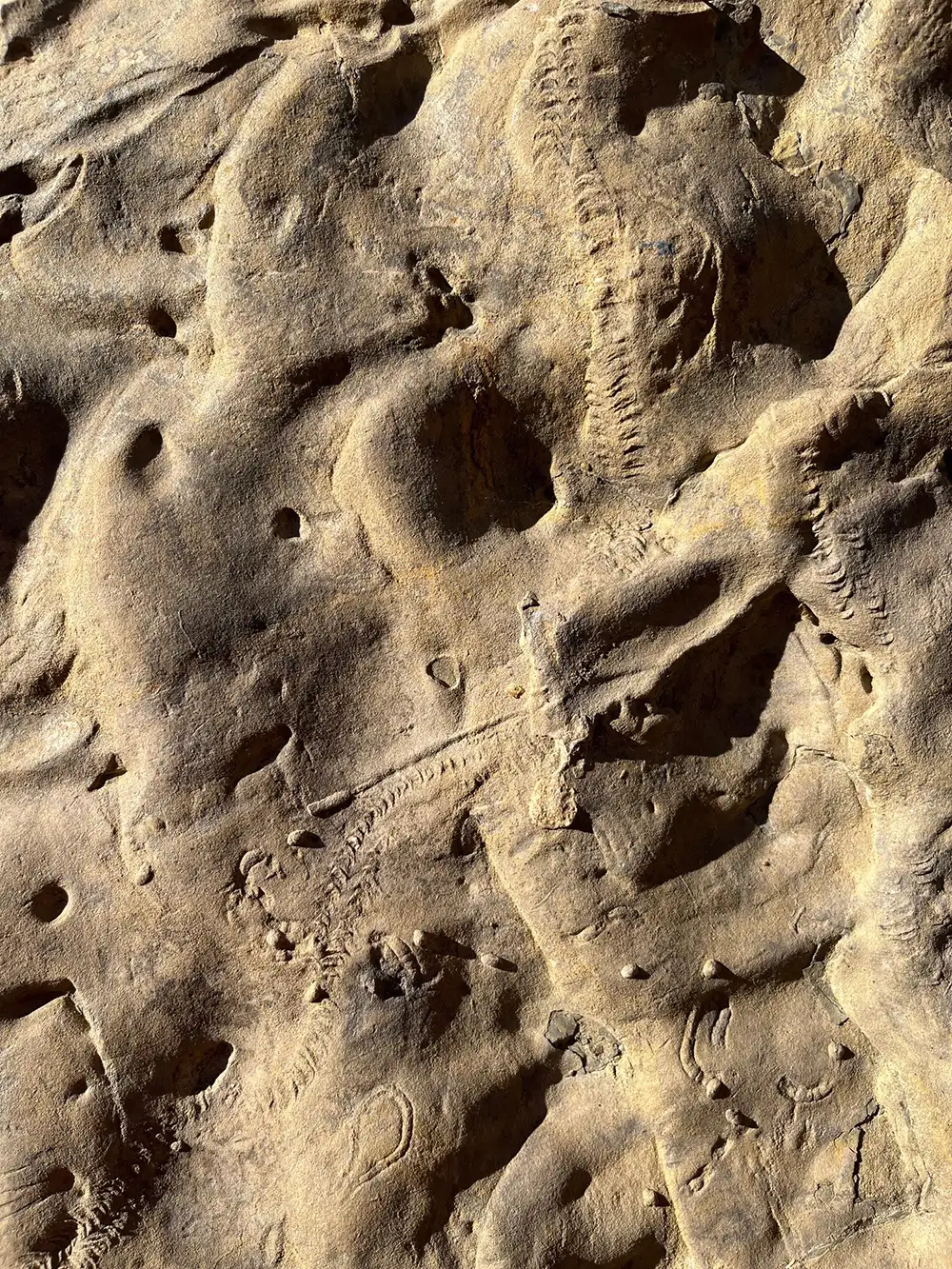
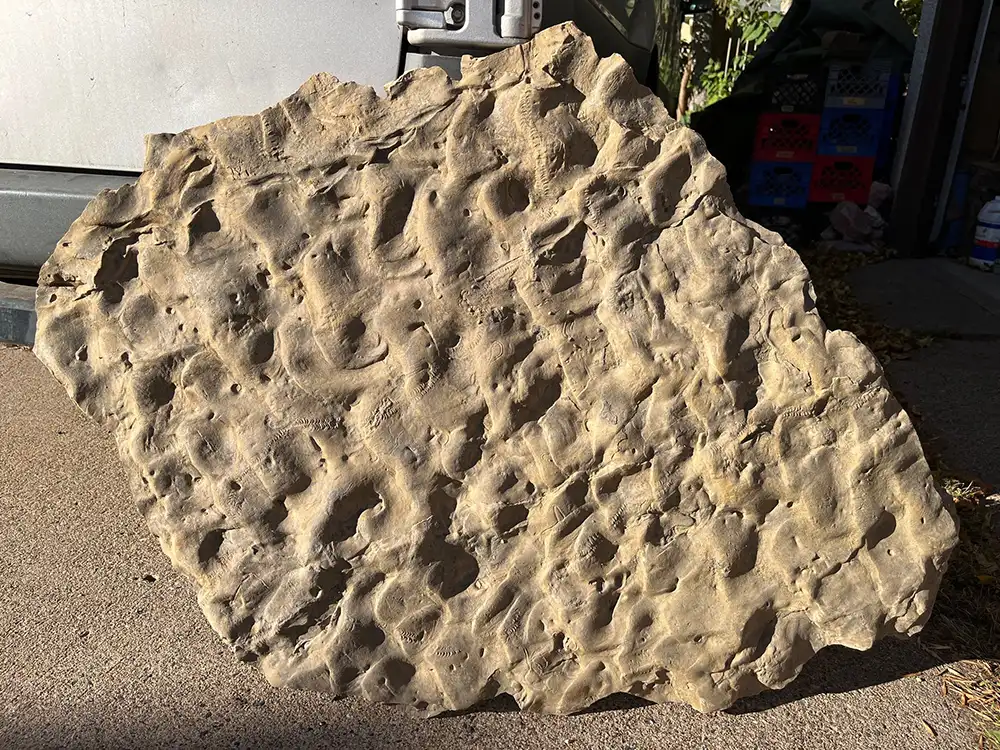
Notes specific to this specimen: HOW THEY FORMED – This is the largest slab with trilobite tracks and traces ever to be found at this famous site and possibly the largest single specimen of trilobite tracks in the world. These trace fossils formed during the Mississippian Period, roughly 325 million years ago, when trilobites crawled across the soft sediment of an ancient marine seafloor. As they moved, their numerous legs scratched the soft sediment creating paired trails known as Cruziana. Look closely at the ripple patterns: You will see several places where a trilobite was crawling over a ripple crest, making clear tracks, but it then “floated” across a depression, leaving no trail at all. When it reconnected with a ripple crest on the other side, it once-again left a trail. Where a trilobite paused or burrowed shallowly into the sediment, it could leave a broader, bilobed impression called Rusophycus.
Fine sediment subsequently covered these traces, protecting them from currents and erosion. Burial and compaction gradually hardened the sediment into rock, preserving the impressions as natural casts or molds. Much later, uplift, erosion and quarrying exposed the bedding surface, revealing the intricate record of trilobite activity.
Size: 30″ x 40″ X 1.5″
Name / Species: Cruziana and Rusophycus
Age: Mississippian Period, 325 million years
Unit: Tar Springs Formation
Site: Perry County, Indiana
Collected: 1992
Collected by:
Documentation: This authentic fossil specimen comes with a Certificate of Authenticity and Origin. In addition, an attractive and informative display card accompanies the specimen.
NOTE: Pickup is available for this specimen. If shipping is required, you will be charged for crating the specimen.
Additional information
| Name / Species | Cruziana and Rusophycus |
|---|---|
| Age | Mississippian Period, 325 million years |
| Unit | Tar Springs Formation |
| Site | Perry County, Indiana |
| Collected | 1992 |