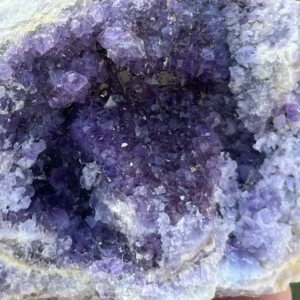
-
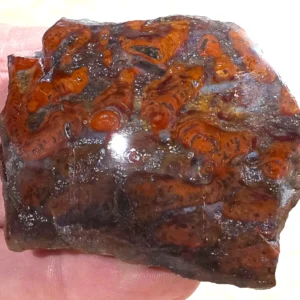
Rainbow Stromatolite (RS3)
Notes specific to this specimen: Another one of the original discovery pieces, collected by us in August 2025. Deep red colonies surrounded by high iron hematite matrix.
SIZE: 2″x 2.58″x .75″
Name Collenia sp. (possible new species)
Age Anamikean / Paleoproterozoic – 1.88 billion years
Unit Gunflint Iron Formation
Site Ontario, Canada
Date 2025Documentation: This authentic fossil specimen comes with a Certificate of Authenticity and Origin. In addition, an attractive and informative display card accompanies the specimen.
$120.00Rainbow Stromatolite (RS3)
$120.00 -
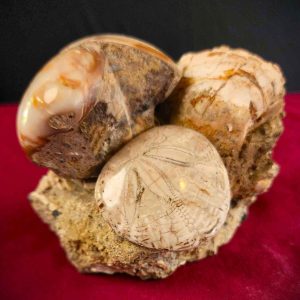
Fossil Sand Dollar and Clam (KH9)
Notes specific to this specimen: One large polished sand dollar with two great polished clams. Matrix piece that has a flat bottom so it stands nicely.
SIZE: 4″x 2″x 3″
NAME: Psuedocardium & Dendraster
AGE: Pliocene 4 million years
UNIT: Etchegoin Formation
SITE: Kettleman Hills, CaliforniaDocuments: This authentic fossil specimen comes with a Certificate of Authenticity and Origin. In addition, an attractive and informative display card accompanies the specimen.
$115.00 -
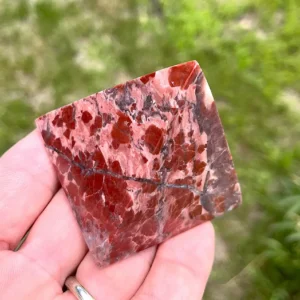
Kona Dolomite (KONA22)
Notes specific to this specimen: Some Kona Dolomite we have carved into various shapes to accentuate the colors and patterns. Classic pyramid shape with nice deep red iron oxide coloration. Polished all the way around – on all sides and base.
SIZE: 2.75″
NAME: Collenia kona
AGE: Paleoproterozoic Era 2.3 billion years
UNIT: Kona Formation
SITE: Kona Hills, Michigan
DATE: 2025
BY: Jon Kramer & Julie MartinezDocumentation: This authentic fossil specimen comes with a Certificate of Authenticity and Origin. In addition, an attractive and informative display card accompanies the specimen.
$112.00Kona Dolomite (KONA22)
$112.00 -
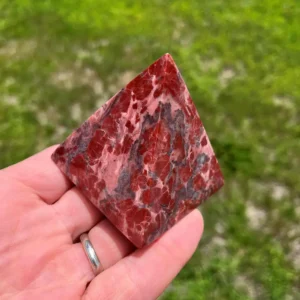
Kona Dolomite (KONA21)
Notes specific to this specimen: Some Kona Dolomite we have carved into various shapes to accentuate the colors and patterns. Classic pyramid shape with nice deep red iron oxide coloration. Polished all the way around – on all sides and base.
SIZE: 2.75″
NAME: Collenia kona
AGE: Paleoproterozoic Era 2.3 billion years
UNIT: Kona Formation
SITE: Kona Hills, Michigan
DATE: 2025
BY: Jon Kramer & Julie MartinezDocumentation: This authentic fossil specimen comes with a Certificate of Authenticity and Origin. In addition, an attractive and informative display card accompanies the specimen.
$112.00Kona Dolomite (KONA21)
$112.00 -
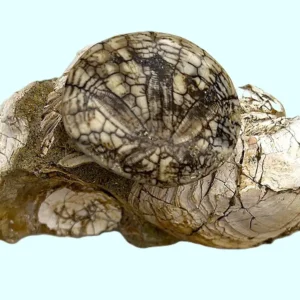
Fossil Sand Dollar and Clam (KH24)
Notes specific to this specimen: An outstanding polished Dendraster sand dollar with showy natural petroleum staining and great color pattern, along with some unpolished Psuedocardium clams. All mounted on native matrix with a flat bottom ready to display. Comes with an attractive information card.
Size: 2″x4″x3″
NAME: Dendraster (sand dollar) & Psuedocardium (clam)
AGE: Pliocene Epoch – 4 million years
UNIT: Etchegoin Formation
SITE: Kettleman Hills, California
COLLECTED: 2026
BY: Jon KramerDocuments: This authentic fossil specimen comes with a Certificate of Authenticity and Origin. In addition, an attractive and informative display card accompanies the specimen.
$110.00 -
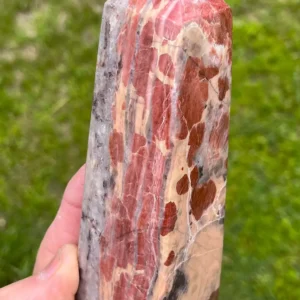
Kona Dolomite (KONA27)
Notes specific to this specimen: Some Kona Dolomite we have carved into various shapes to accentuate the colors and patterns. This obelisk shows lively color and great patterning that is present in the better pieces of this unique material. Polished on all sides, with a flat base so it stands up easily.
SIZE: 5″
NAME: Collenia kona
AGE: Paleoproterozoic Era 2.3 billion years
UNIT: Kona Formation
SITE: Kona Hills, Michigan
DATE: 2025
BY: Jon Kramer & Julie MartinezDocumentation: This authentic fossil specimen comes with a Certificate of Authenticity and Origin. In addition, an attractive and informative display card accompanies the specimen.
$110.00Kona Dolomite (KONA27)
$110.00 -
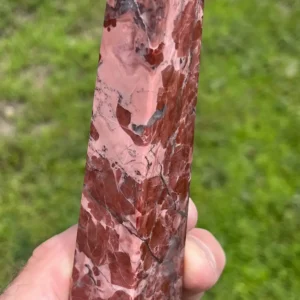
Kona Dolomite (KONA26)
Notes specific to this specimen: Some Kona Dolomite we have carved into various shapes to accentuate the colors and patterns. This obelisk shows lively color and great patterning that is present in the better pieces of this unique material. Polished on all sides, with a flat base so it stands up easily.
SIZE: 5″
NAME: Collenia kona
AGE: Paleoproterozoic Era 2.3 billion years
UNIT: Kona Formation
SITE: Kona Hills, Michigan
DATE: 2025
BY: Jon Kramer & Julie MartinezDocumentation: This authentic fossil specimen comes with a Certificate of Authenticity and Origin. In addition, an attractive and informative display card accompanies the specimen.
$110.00Kona Dolomite (KONA26)
$110.00 -
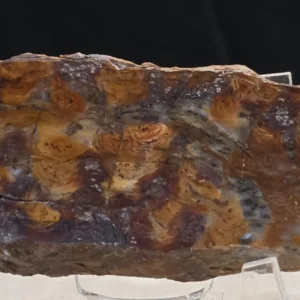
Rainbow Stromatolite (RS2)
Notes specific to this specimen: Another one of the original discovery pieces, collected by us in August 2025. Unusual wine coloring with distinct colonies.
SIZE: 1.5″x 4″x .5″
Name Collenia sp. (possible new species)
Age Anamikean / Paleoproterozoic – 1.88 billion years
Unit Gunflint Iron Formation
Site Ontario, Canada
Date 2025Documentation: This authentic fossil specimen comes with a Certificate of Authenticity and Origin. In addition, an attractive and informative display card accompanies the specimen.
$110.00Rainbow Stromatolite (RS2)
$110.00 -
Thunder Bay Amethyst (TBA21)
Notes specific to this specimen: Deep purple crystals all over the front and top of this specimen. Nice collection of complex cavities intersecting in this piece. This is a “stand-up” with a cut flat bottom allowing it to sit upright to show off the crystal cavity nicely. Rock is naturally rough all the way around.
SIZE: 4″x 3″x 2″
Name / Species: Quartz, variety Amethyst
Age: Mesoproterozoic Era – 1.1 billion years
Unit: Archean Granite (unassigned formation)
Site: Diamond Willow Mine, Pearl, Ontario, Canada
Collected: 2016
Collected by: Jon and JulieDocumentation: This authentic specimen comes with a Certificate of Authenticity and Origin.
$95.00Thunder Bay Amethyst (TBA21)
$95.00 -
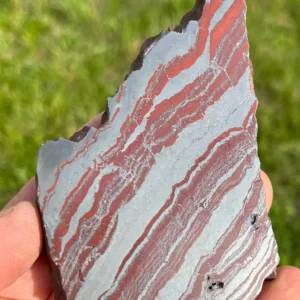
Banded Iron Formation (BIF6)
Notes specific to this specimen: A classic specimen from a classic locality. Red jasper alternating with hematite silver banding. One side polished, the other sawn.
SIZE: 2.5″x 5″x 3/8″
MINERALS: Jasper & Hematite
AGE: Paleoproterozoic – 2.1 billion years
UNIT: Negaunee Iron Formation
SITE: Ishpeming, Michigan
COLLECTED: 2025
BY: Julie & JonDocumentation: This authentic fossil specimen comes with a Certificate of Authenticity and Origin. In addition, an attractive and informative display card accompanies the specimen.
$95.00Banded Iron Formation (BIF6)
$95.00 -
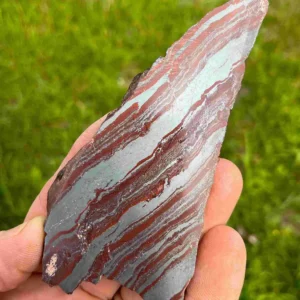
Banded Iron Formation (BIF3)
Notes specific to this specimen: A classic specimen from a classic locality. Red jasper alternating with hematite silver banding. One side polished, with some slight saw marks on narrow end with a lower price as a result Back is sawn face.
SIZE: 2″x 5″x 3/8″
MINERALS: Jasper & Hematite
AGE: Paleoproterozoic – 2.1 billion years
UNIT: Negaunee Iron Formation
SITE: Ishpeming, Michigan
COLLECTED: 2025
BY: Julie & JonDocumentation: This authentic fossil specimen comes with a Certificate of Authenticity and Origin. In addition, an attractive and informative display card accompanies the specimen.
$95.00Banded Iron Formation (BIF3)
$95.00 -
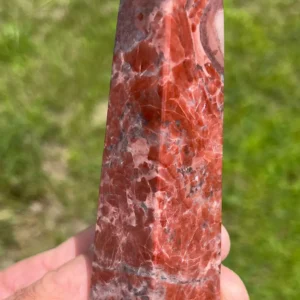
Kona Dolomite (KONA25)
Notes specific to this specimen: Some Kona Dolomite we have carved into various shapes to accentuate the colors and patterns. This obelisk shows lively color and great patterning that is present in the better pieces of this unique material. Polished on all sides, with a flat base so it stands up easily.
SIZE: 4.5″
NAME: Collenia kona
AGE: Paleoproterozoic Era 2.3 billion years
UNIT: Kona Formation
SITE: Kona Hills, Michigan
DATE: 2025
BY: Jon Kramer & Julie MartinezDocumentation: This authentic fossil specimen comes with a Certificate of Authenticity and Origin. In addition, an attractive and informative display card accompanies the specimen.
$95.00Kona Dolomite (KONA25)
$95.00
Shop Our Catalog
- Browse All Products
- Agatized Algae
- Agatized Coral
- Banded Iron Formation
- Biwabik Iron Stromatolites
- Cerdito Prospect Rift Crystals
- Dinosaur Bones
- Exceptional Museum Specimens
- Fossil Crabs
- Fossil Echinoids
- Fossil Fern
- Fossil Fish
- Grypania Spiralis
- Gunflint Chert
- Gypsum Selenite
- Biwabik Iron Stromatolites
- Kettleman Hills Fossils
- Kona Dolomite
- Minnesota Thomsonite
- North American Rift
- Rucks Pit
- Specularite
- Sudbury Impactite
- Thunder Bay Amethyst
- Trilobites
- Volcanic Bombs