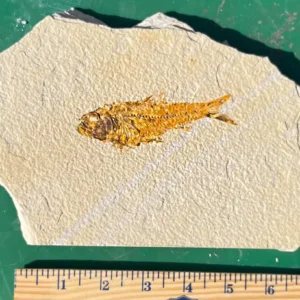
-
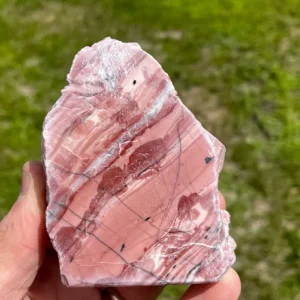
Kona Dolomite (KONA32)
Notes specific to this specimen: We cut and polish these particular Kona Dolomite pieces to showcase the uniqueness of this material. Here the front is cut and polished. It sits upright on a flat base with a slight angle for optimal viewing. The back is left rough. This piece has beautiful coloration.Great conversation piece of one of the world’s oldest fossils.
SIZE: 3″ HighNAME: Collenia kona
AGE: Paleoproterozoic Era 2.3 billion years
UNIT: Kona Formation
SITE: Kona Hills, Michigan
DATE: 2025
BY: Jon Kramer & Julie MartinezDocumentation: This authentic fossil specimen comes with a Certificate of Authenticity and Origin. In addition, an attractive and informative display card accompanies the specimen.
$65.00Kona Dolomite (KONA32)
$65.00 -
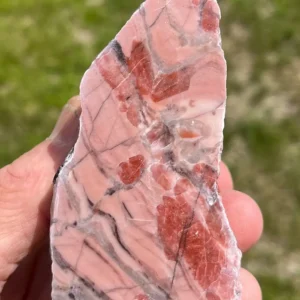
Kona Dolomite (KONA35)
Notes specific to this specimen: We cut and polish these particular Kona Dolomite pieces to showcase the uniqueness of this material. Here the front is cut and polished. It sits upright on a flat base with a slight angle for optimal viewing. The back is left rough. This piece has beautiful coloration.Great conversation piece of one of the world’s oldest fossils.
SIZE: 3″ High
NAME: Collenia kona
AGE: Paleoproterozoic Era 2.3 billion years
UNIT: Kona Formation
SITE: Kona Hills, Michigan
DATE: 2025
BY: Jon Kramer & Julie MartinezDocumentation: This authentic fossil specimen comes with a Certificate of Authenticity and Origin. In addition, an attractive and informative display card accompanies the specimen.
$65.00Kona Dolomite (KONA35)
$65.00 -
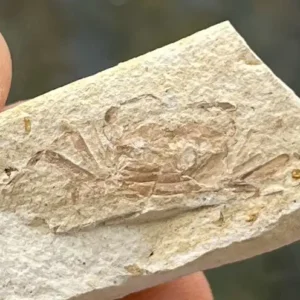
Fossil Crab (PC15)
Notes specific to this specimen: A complete crab with claws out. No touch up or restoration.
Name: Pinnixa gallehiri
Age: Miocene Epoch, 10 million years
Unit: Monterey Formation (Aguajito Member)
Site: Carmel Valley, California
Date: 2016Size: Crab 1″ / Rock 1.5″
Documentation: This authentic fossil specimen comes with a Certificate of Authenticity and Origin. In addition, an attractive and informative display card accompanies the specimen.
$65.00Fossil Crab (PC15)
$65.00 -
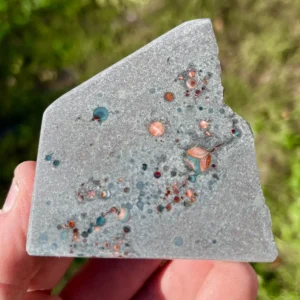
Minnesota Thomsonite (MNT13)
Notes specific to this specimen: Cut and polished matrix piece from the old Thomsonite Mine along the North SHore of Lake Superior about five miles southwest of Grand Marais, Minnesota. Front polished face has multiple Thomsonites. Back and sides are rough.
Size: 3″ x 3″ x 2.5″
Name / Species: Thomsonite
Age: Mesoproterozoic Era, 1.1 billion years
Unit: Terrace Point Basalt
Site: Alley Agate Shop Thomsonite Mine Cook County, Grand Marais, MInnesota
Collected: 1981
Collected by: Jon KramerDocumentation: This authentic fossil specimen comes with a Certificate of Authenticity and Origin. In addition, an attractive and informative display card accompanies the specimen.
$65.00Minnesota Thomsonite (MNT13)
$65.00 -
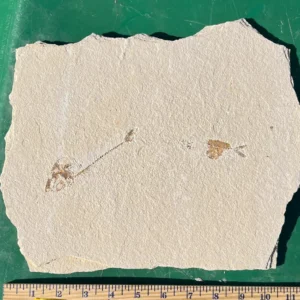
Single Complete Fish GR004 (unprepared)
Notes specific to this specimen:
Single complete fish – unprepared DIY project!
NAME: Knightia, Dyplomystus and various other species
AGE: Eocene Epoch / 50 million years
UNIT: Green River Formation
SITE: Kemmerer, WyomingSize: 5″ x 3″
Documentation: This authentic fossil specimen comes with a Certificate of Authenticity and Origin. In addition, an attractive and informative display card accompanies the specimen.
$70.00 -
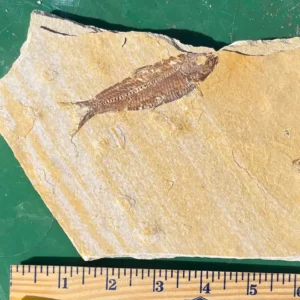
Single Complete Fish GR111
Notes specific to this specimen:
Single complete fish
NAME: Knightia, Dyplomystus and various other species
AGE: Eocene Epoch / 50 million years
UNIT: Green River Formation
SITE: Kemmerer, WyomingSize: 3″
Documentation: This authentic fossil specimen comes with a Certificate of Authenticity and Origin. In addition, an attractive and informative display card accompanies the specimen.
$70.00Single Complete Fish GR111
$70.00 -
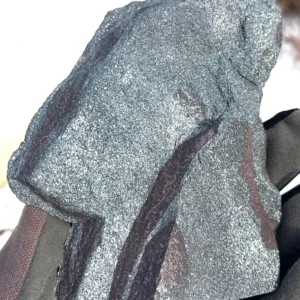
Specularite Standup (S5)
Notes specific to this specimen: This piece has a flat sawn bottom so that it stands up nicely. Multiple layers of specularite with interbedded red jasper, showing the classic layering characteristic of Banded Iron Formation (BIF). Glittery surfaces on both sides. A very unique and interesting shape with multiple BIF layers.
SIZE: 6″ x 4″ x 2″
Minerals: Hematite and Magnetite
Age: Paleoproterozoic – 2.2 billion years
Unit: Negaunee Iron Formation
Site: Marquette County, MichiganDocumentation: This authentic fossil specimen comes with a Certificate of Authenticity and Origin. In addition, an attractive and informative display card accompanies the specimen.
$72.00Specularite Standup (S5)
$72.00 -
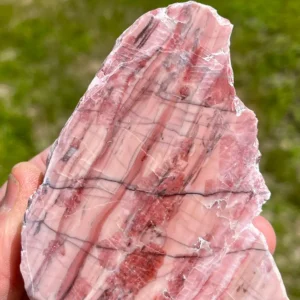
Kona Dolomite (KONA34)
Notes specific to this specimen: We cut and polish these particular Kona Dolomite pieces to showcase the uniqueness of this material. Here the front is cut and polished. It sits upright on a flat base with a slight angle for optimal viewing. The back is left rough. This piece has beautiful coloration.Great conversation piece of one of the world’s oldest fossils.
SIZE: 3″ High
NAME: Collenia kona
AGE: Paleoproterozoic Era 2.3 billion years
UNIT: Kona Formation
SITE: Kona Hills, Michigan
DATE: 2025
BY: Jon Kramer & Julie MartinezDocumentation: This authentic fossil specimen comes with a Certificate of Authenticity and Origin. In addition, an attractive and informative display card accompanies the specimen.
$75.00Kona Dolomite (KONA34)
$75.00 -
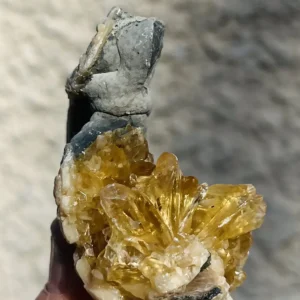
Crystalized Clam (OK14)
Notes specific to this specimen: Exceptional museum grade specimen. Classic full size clam loaded with juicy calcite crystals. No repairs, no touch up, no enhancements – just pure crystal joy. Full clam in matrix. Sits upright.
SIZE: 2″x 1.5″x 1″
Name / Species: Mercenaria permagna
Age: Pleistocene 2 - 4 Million Years
Unit: Nashua Formation
Site: Okeechobee County, Florida
Collected: 2026
Collected by: Jon KramerDocumentation: This authentic fossil specimen comes with a Certificate of Authenticity and Origin.
$75.00Crystalized Clam (OK14)
$75.00 -
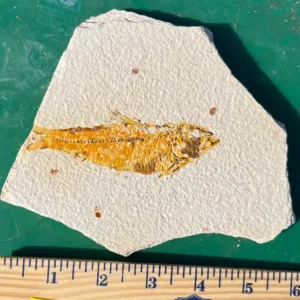
Single Complete Fish GR110
Notes specific to this specimen:
Single complete fish
NAME: Knightia, Dyplomystus and various other species
AGE: Eocene Epoch / 50 million years
UNIT: Green River Formation
SITE: Kemmerer, WyomingSize: 4″
Documentation: This authentic fossil specimen comes with a Certificate of Authenticity and Origin. In addition, an attractive and informative display card accompanies the specimen.
$80.00Single Complete Fish GR110
$80.00 -
Single Complete Fish GR112
Notes specific to this specimen:
Single complete fish
NAME: Knightia, Dyplomystus and various other species
AGE: Eocene Epoch / 50 million years
UNIT: Green River Formation
SITE: Kemmerer, WyomingSize: 4″
Documentation: This authentic fossil specimen comes with a Certificate of Authenticity and Origin. In addition, an attractive and informative display card accompanies the specimen.
$80.00Single Complete Fish GR112
$80.00 -
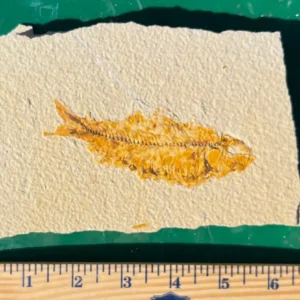
Single Complete Fish GR120
Notes specific to this specimen:
Single complete fish
NAME: Knightia, Dyplomystus and various other species
AGE: Eocene Epoch / 50 million years
UNIT: Green River Formation
SITE: Kemmerer, WyomingSize: 5″
Documentation: This authentic fossil specimen comes with a Certificate of Authenticity and Origin. In addition, an attractive and informative display card accompanies the specimen.
$80.00Single Complete Fish GR120
$80.00
Shop Our Catalog
- Browse All Products
- Agatized Algae
- Agatized Coral
- Banded Iron Formation
- Biwabik Iron Stromatolites
- Cerdito Prospect Rift Crystals
- Dinosaur Bones
- Exceptional Museum Specimens
- Fossil Crabs
- Fossil Echinoids
- Fossil Fern
- Fossil Fish
- Grypania Spiralis
- Gunflint Chert
- Gypsum Selenite
- Biwabik Iron Stromatolites
- Kettleman Hills Fossils
- Kona Dolomite
- Minnesota Thomsonite
- North American Rift
- Rucks Pit
- Specularite
- Sudbury Impactite
- Thunder Bay Amethyst
- Trilobites
- Volcanic Bombs